Showing posts with label N.C.. Show all posts

Saturday, February 7, 2015

Jason Mott on D.G. Martin's 'North Carolina Book Watch' Sunday

Jason Mott
 Jason Mott, author of the recent novel, "The Wonder of all Things," is a writer's writer. I was lucky enough to moderate a panel last fall on which he served. He was extremely articulate about the writing life and his no-nonsense approach to tackling a novel, and he gave the audience valuable tips on what to do when you're stuck: keep writing.
Mott will be on D.G. Martin's "North Carolina Book Watch" this Sunday at noon and again on Thursday at 5 p.m. (UNC-TV).
I'm hoping Martin will ask him what inspired his first novel, "The Returned," on which the ABC television series, "Resurrection," is based.
His latest, "The Wonder of All Things," concerns a 13-year-old girl who has amazing healing powers. But each time she uses her powers, there's a cost to her.
You don't want to miss this inspiring writer from Bolton, N.C.


Wednesday, January 28, 2015

Leave it to Charlotte's Lee Ann Brown: A poem about poke sallet

Lee Ann Brown grew up in Charlotte. She is the founder of the award-winning, independent poetry press Tender Buttons and the author of several collections of poetry, including her most recent, "In the Laurels, Caught" (Fence Books, $15.95). She divides her time between New York City, where she teaches at St. John's University, and Marshall, N.C.

The following is from "In the Laurels, Caught."

POKE SALLET

is cooked not raw

              stay ahead
              of the red

Eat in spring
       cook when 6 inches or less

lymph cleanser

   2 boils

Do Not drink the potlikker

Eat the berry

1 on the 1st day
2 on the 2nd day
3 on the 3rd day

How far do you
spit out the poisonous seeds?

become a dynamic accumulator
bringing up minerals from below

Children in a school near here used poke ink
It was that with which they wrote

any daughter paints her arms

             the way to play the plants

   on paper the unfixed juice goes from bright magen-
ta to a dried blood color

the man who built our house
     first dreamed of a pokeberry sky

 but after a hot day of crushing berries
and smearing the boards, gave into Benjamin Moore

it's "hard to fix"

 that color more bright than cochineal

Monday, January 19, 2015

UNC at Pittsboro? Historians reveal what might've been and more

http://images.booksense.com/images/624/496/9780786496624.jpg 

Imagine that our great University of North Carolina at Chapel Hill, would, but for the tight-fistedness of an 18th century landowner, have been our great University of North Carolina at Pittsboro.

On Pokeberry Creek, no less.

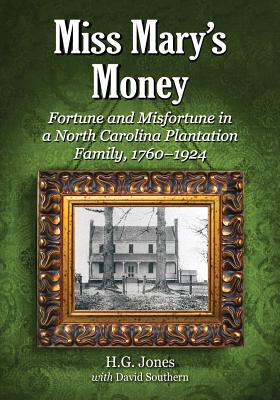
It's true, and the details of this near-miss of the 700-acre Chatham County Jones Grove plantation as a site for the University in 1792 -- as well as the secrets literally dug from unmarked slave graves -- are revealed in a tantalizing new book, "Miss Mary's Money: Fortune and Misfortune in a North Carolina Plantation Family, 1760-1924" (McFarland Publishers, Jefferson, N.C., $29.95 softcover.) by H.G. Jones with David Southern.

Trust Jones, who's taught history in several universities, served as state archivist and director of the North Carolina Department of Archives and History and as curator of the North Carolina Collection at UNC, to nail the most elusive facts and make history come jigging to life.


David Southern is a managing editor at Duke University Press of "The Collected Letters of Thomas and Jane Welsh Carlyle" and a genius of a sleuth.

Let's put aside the complicated Smith genealogy that begins with a 1760 land grant to one Richard Parker, and just say that Mary Ruffin Smith became the sole heir of several sizable parcels, including Jones Grove, which over the years expanded to more than 1,000 acres, and which, at her death in 1885, she willed to the University. Proceeds from the sale of the property were parlayed into scholarships.

Mary Smith never married. But her unsavory bachelor brothers, Francis Smith and Sidney Smith, one a quasi-doctor and one a binge-drinking lawyer, sired four daughters with a slave woman named Harriet, often as the result of rape.

And that's only the beginning of this fascinating story, which anyone interested in dysfunctional families, horrific treatment of slave women by their white owners, great wealth, family devotion and heart-swelling generosity, will definitely want to read.


Tuesday, September 23, 2014

Miraculous healing subject of Jason Mott's novel 'The Wonder of All Things'


Jason Mott by Michael Becker
"N.C. Bookwatch" will be re-running host D.G. Martin's interview with bestselling N.C. novelist  Jason Mott ("The Returned") at 5 p.m. on Thursday on UNC-TV.

"The Returned" was the inspiration for the popular ABC series, "Resurrection," about the dead returning to life. This week, Mott's second novel, "The Wonder of All Things," will hit bookstores.
If you're hoping for more magic, you're in luck.

"On an ordinary day at an air show like that in any small town across the country," reads the jacket copy, "a plane crashes into a crowd of spectators. After the dust clears, a 13-year-old girl named Ava is found huddled beneath a pocket of rubble with her best friend, Wash. He is injured and bleeding, and when Ava places her hands over him, his wounds disappear."

The Washington Post has called it "compulsively readable" and Publishers Weekly says, "Exceptional.... Riveting."

Mott grew up in and still lives in Bolton, N.C., a town of three-square miles in Columbus County, once the home of the Waccamaw Lumber Company. Population: 700 and holding.

Mott, who is 36, was raised Southern Baptist, and he told a USA Today reporter that the idea of miraculous healing has always interested him.

"In the South there's always a bit of magic, through the stories you hear. Everything here has a back story to it. And in the South there's the phenomenon of churches where healing goes on."

Mott studied fiction and poetry at UNC Wilmington, earning BA and MFA degrees. He's published short stories and two books of poetry, one of which, "This Thing Between Us We Call Love," is from Main Street Rag of Charlotte.

Upcoming Jason Mott Readings and Book Signings

  • 7 p.m. Sept. 30: Barnes & Noble, Wilmington, N.C.
  • 7:30 p.m., Oct. 1: Quail Ridge Books and Music, Raleigh, N.C.
  • 2 p.m., Oct. 9: Wilkes Community College, Wilkesboro, N.C.
  • 7 p.m., Oct. 28: The Hanesbrand Auditorium, Winston-Salem, N.C.


Friday, June 27, 2014

If You're Craving the Ocean, These New Novels Offer Coastal Settings


Stuck inland this month and pining for water? Here's a stack of new fiction -- each one set so close to the ocean you can hear the waves crashing.

"It Comes in Waves" (Penguin, $15 original paperback) is the fourth novel of Charlotte's Erika
Marks. The novel concerns Claire, whose fiance left her for her best friend Jill. Now it's 18 years
later, Jill is a widow and raising a teenage son on Folly Beach, S.C., which is where ESPN happens to send Claire to  make a documentary about surfing. After a chance meeting, the two women open the old gritty bag of guilt, blame and, perhaps, forgiveness. If you want to attend the launch party at Fountainhead Books in Hendersonville on Tuesday, July 1, at 7 p.m., you can pre-buy a copy of the novel from Fountainhead for two tickets (828-697-1870).

Sullivans Island, S.C. native and bestselling author Dorothea Benton Frank (who appears to have signed books everywhere in the Southeast but Charlotte) gives us three generations of Low Country women in "The Hurricane Sisters" (Morrow, $26.99), a novel of buried secrets, sexual electricity, domestic disturbance and teenage angst.  Real-life touchstones: Langdon's and Basil's on Mt. Pleasant, Donleavy's Pub on Sullivans and Martha Lou's in Charleston ("one of those places you only know if you were from Charleston or a local took you there.") Frank is also the author of "Sullivan's Island," "Porch Lights," "Pawley's Island" and "The Last Original Wife."

HarperCollins acquired the novel, "The Story of Land and Sea" ($26.99), in a ten-house, seven-bidder auction. Known in the trade as a "big buzz book," this debut novel is by Katy Simpson Smith, a Jackson, Miss., native, who earned her PhD in history at UNC Chapel Hill. Set in 1793 in Beaufort, the novel tells the story of a father desperate to save his 10-year-old daughter Tabitha from a yellow fever epidemic. Entwined is the long-ago story of Tabitha's mother as a child and her uneasy friendship with a young slave girl named Moll. "The Story," already hailed as a "striking achievement" by "an extraordinary writer," is due in August.

From the author of the prize-winning short story collection, "How to Escape from a Leper Colony," Tiphanie Yanique's first novel, "Land of Love and Drowning" (Riverhead Books, $27.95) is set on her native St. Thomas in the Virgin Islands. The novel chronicles three generations of the Bradshaw family through the 20th Century. According to Greenlight Bookstore in Brooklyn, N.Y., the novel weaves stories of "magic and lust" (read also incest), "unknown connections," "hidden mysteries," "family legacies," and "an island undergoing historical changes." Publisher's Weekly says: "Yanique offers an affecting narrative of the Virgin Islands that pulses with life, vitality and a haunting evocation of place."



Tuesday, May 6, 2014

Kudos to the Contest Winners and Their Remarkable Teacher

http://www.tryondailybulletin.com/wp-content/uploads/2014/04/DSC5936.jpg
Gina Atkins and Joseph Bathanti


The four top winners in the student category of the Sidney Lanier Poetry Contest sponsored by the Lanier Library in Tryon are:
a. All conceited
b. All athletic
c. All cool
d. All in the same creative writing class at Charlotte's Providence High School.

You're correct if you said "d." The teacher of that remarkable class is Marva Hutchinson.
So kudos to Gina Atkins, 1st place; Ryan Herrera, 2nd; Leah Mell, 3rd; Christina Jaquith, honorable mention. And special kudos to Marva Hutchinson.
North Carolina poet laureate Joseph Bathanti judged the contest, which was open to students in North Carolina, South Carolina and Georgia.
A word on Sidney Lanier, who wrote the poem, "The Marshes of Glenn," and who died of tuberculosis in 1881 outside Tryon at age 39.

Lanier loved to write poetry. But even more, he loved to play the flute, and, so the story goes, he would gather reeds from river banks and fashion his own instruments. Lanier's great-grandson Robin Reid of Emory University once told me that Lanier concealed a flute inside his shirt sleeve when he was captured by the Union soldiers and imprisoned at Point Lookout, Md. When the guards weren't listening, he said, Lanier would play the flute for his fellow prisoners.
Once, said Reid, Lanier lay under an arbor and fell into a trance listening to the music of the leaves.


Tuesday, April 29, 2014

Jack Gilbert: "Poems of Savage Compassion"

Before we let National Poetry Month slip down the rabbit hole, here's a favorite poem of mine by the late Jack Gilbert, born in Pittsburgh, Pa., in 1925. The poet James Dickey said of Gilbert's work: "He takes himself away to a place more inward than is safe to go. From that awful silence and tightening, he returns to us poems of savage compassion."
 
Summer at Blue Creek, North Carolina

There was no water at my grandfather’s
when I was a kid and would go for it
with two zinc buckets. Down the path,
past the cow by the foundation where
the fine people’s house was before
they arranged to have it burned down.
To the neighbor’s cool well. Would
come back with pails too heavy,
so my mouth pulled out of shape.
I see myself, but from the outside.
I keep trying to feel who I was,
and cannot. Hear clearly the sound
the bucket made hitting the sides
of the stone well going down,
but never the sound of me.

-- from the New Yorker magazine, Nov. 10, 2008
