


As research goes, the fact-finding that Eric Wilson did for his new book is about as weird as it gets.
“Everyone Loves a Good Train Wreck: Why We Can’t Look Away” (Sarah Crichton Books; $22) explores morbid curiosity – from an intellectual and historical perspective, and from Wilson’s own point of view.
Wilson, a Wake Forest University English professor who loves Gothic literature and horror movies, wondered why humans stare at grisly auto accidents, why we take pleasure in others’ pain, why we’re fascinated by evil.
His work involved lots of standard academic book-reading research. But he also set out to find people who are, as he puts it, “professionally morbid.”
He met an Atlanta man who’s been collecting obituaries since childhood and a guy whose business involved selling art created by serial killers.
He also visited Joe Coleman, an artist who runs The Odditorium, a Brooklyn museum filled, its website says, with “sideshow oddities, serial-killer ephemera and wax-museum dioramas.”
And, to explore why we sometimes take pleasure in others’ misfortune, Wilson spent time on YouTube, watching funny videos of people falling down.
Wilson, whose academic specialties include William Blake and filmmaker David Lynch, has made a career out of exploring the darker side of our natures. In his 2008 book, “Against Happiness: In Praise of Melancholy,” he argues that sadness gets an unfair rap in happiness-obsessed America.
In this new book, Wilson argues that there’s an upside to our fascination with the morbid.
Confronting death, he says, “becomes a special invitation to think about life.” When we think about our numbered days, “life become full, electric,” he says. “It’s far from morbid. It’s life-affirming.”
To make his case, Wilson touches on subjects as diverse as the Tiger Woods sex scandal and the ultimate tear-jerker movie, “Steel Magnolias.”
But he begins and ends with the can’t-look-away event of our lifetimes – 9/11.
As the book starts, it’s Sept. 11, 2001, and he’s glued to the television, unable to turn off the images, despite his wife’s prodding.
As it ends, it’s 2010, and he’s visiting the Ground Zero Museum and Workshop, contemplating how rescuers’ work became an act of worship, how that place became holy ground.
As he leaves, he buys a book of 9/11 photographs, returns to his hotel, opens it to a page and shows it to his wife and daughter.
“Look,” he says.
Friday, March 30, 2012
N.C. author explores why we love a good train wreck

Tuesday, March 27, 2012
'The Cove' author Ron Rash at Wingate University

Prize-winning author Ron Rash will discuss his soon-to-be-released novel, "The Cove," at 7 p.m. Friday, March 30, as part of a Wingate University fund-raising event.
Tickets for the event, at the Rolling Hills Country Club in Monroe, are $50. That includes a dinner buffet and book signing. Proceeds benefit Friends of the Ethel K. Smith Library. More information: c.inge@wingate.edu or 704-233-8091.
Rash's newest novel is set in and around Mars Hill during World War I. It explores a community's prejudices as it tells the story Laurel Shelton, ostracized and lonely until a mute stranger appears near her isolated farm.
"The Cove," isn't out until April 10, but it's already winning high praise, including four starred reviews -- in the Library Journal, Booklist, Kirkus Reviews and Publishers Weekly.
Monday, March 26, 2012
'Map of the World' author at Catawba College

Jane Hamilton, author of "A Map of the World," "The Book of Ruth" and "Laura Rider's Masterpiece," is this year's featured speaker at Catawba College's Brady Author's Symposium.
Hamilton will speak at 11 a.m. Thursday, March 29, at the Salisbury college's Robertson College-Community Center. For tickets, call 704-637-4393. They're $20 for the lecture, $20 for a 12:15 p.m. luncheon and $10 for a writing question-and-answer session at 2 p.m.
Check here for more information.
Hamilton's first novel, "The Book of Ruth," won the PEN/Ernest Hemingway Foundation Award for best first novel. Both that novel and her second, "A Map of the World," were Oprah's Book Club selections.
Friday, March 23, 2012
Author Thomas Mallon teaching at Davidson College
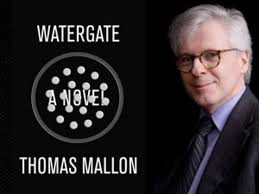
This has been one busy spring for author Thomas Mallon. Along with making a book tour to promote his new novel, "Watergate," he's teaching this semester at Davidson College, as the visiting McGee professor of writing.
One class is fiction writing, the other creative nonfiction. That's fitting, given that Mallon's writing credentials extend to just about everything.
He's the author of eight novels, including "Watergate," which Sam Shapiro reviews this week on the Observer's book page.
Then there's his nonfiction, which includes books on plagiarism ("Stolen Words"), diaries ("A Book of One's Own") and letters ("Yours Ever"). He's also the recipient of a National Book Critics Circle Award for reviewing, and his essays are regularly published in top magazines. Let's hope his students are suitably impressed.
As George Washington University's Creative Writing Program director, Mallon regularly teaches undergraduates. He told me recently that his Davidson students are "very good, very prepared, lively."
But in general, he finds, today's college students face some new writing challenges.
When you count Tweeting, texting and other social media, they're probably out-writing previous generations of students. But in this case, Mallon finds that practice doesn't make perfect. "When you're writing all the time," he says, "you'll think of it as a casual thing, and you get sloppy."
They also face new challenges as they try to develop distinctive writing voices. Now that the Internet allows anyone to publish anything, "it's sort of harder to get your voice heard above the din," he says. "Students have always been told to develop voice," but with so many voices talking at once, "it's very daunting."
And then there are emoticons. Advice to Mallon's Davidson students: Don't send your professor a smiley face.
"I don't believe I have ever used one," he says, "and if I manage to expire with that record intact, I think I'll be happy."
Tuesday, March 20, 2012
Wake Forest offers free writing workshops, readings
Wake Forest University launches a three-day celebration of writers and writing this week, as more than 40 novelists, biographers, poets, screenwriters, journalists and others -- all Wake Forest alumni -- return to campus for Words Awake!
Workshops, panels and readings will be held Friday through Sunday (March 23-25) in Wake's Benson University Center. They're free and public, but registration is encouraged. Topics include "writing sports," "writing business," "writing biography/memoir" and "writing/editing careers."
Speakers include:
Newsweek book critic Malcolm Jones
Fiction writers Stephen Amidon ("The New City") and Clint McCown ("The Member-Guest")
Nonfiction writer Doug Waller ("Wild Bill Donovan: The Spymaster Who Created the OSS and Modern American Espionage")
Children's author Jennifer Trafton ("The Rise and Fall of Mount Majestic")
New York Times chief theater critic Ben Brantley
Monday, March 19, 2012
Author Judith Viorst in Charlotte Thursday

Like many readers, I discovered Judith Viorst through her wonderful children's book, "Alexander and the Terrible, Horrible, No Good, Very Bad Day."
But Viorst, who speaks in Charlotte Thursday, is also known for poetry, adult novels and nonfiction, including the bestselling "Necessary Losses: The Loves, Illusions, Dependencies, and Impossible Expectations That All of Us Have to Give Up in Order to Grow."
The Jewish Federation of Greater Charlotte's Women's Division hosts Viorst at its annual spring lecture at 8 p.m. Thursday, March 22, in the Main Hall of Temple Beth El, 5101 Providence Road.
Tickets are $40 for the lecture plus dinner, which starts at 6:15 p.m., and $18 for the lecture only. This Jewish Federation fundraising event also requires a minimum $50 pledge to the 2012 Annual Campaign.
For tickets, call 704-944-6757 or go to www.jewishcharlotte.org.
Thursday, March 15, 2012
N.C. native writes 'Birds of a Lesser Paradise'

In her debut short story collection, “Birds of a Lesser Paradise,” Megan Mayhew Bergman includes an African gray parrot in her first story and a self-mutilating Rottweiler in her second. In tales that follow, you’ll find, among other creatures, a lemur, a wolf hybrid and two sheep named Proctor and Gamble.
Bergman didn’t set out to populate her stories with animals, but once you know her back story, it all makes sense.
She grew up in Rocky Mount and graduated from Wake Forest University, where she met her husband, the son of two Vermont veterinarians. He went on to N.C. State and also became a veterinarian.
She now lives on 13 acres in rural Vermont, with her family, four dogs and four cats.
“Any time I would sit around the dinner table, it was all vet talk, all the time,” she told me recently. “At first, it used to make my stomach turn when they’d talk about what they found in the belly of a Lab,” she said, but over time, she evolved from squeamish to intrigued.
She found herself encountering animal stories – and inspiration – wherever she turned.
“Every Vein Has a Tooth,” for instance, features an animal activist who collects strays the way her mother once collected porcelain Christmas villages.
No surprise that her acquisitions, which eventually include two sheep rescued from a filthy house, are ruining her relationship with her lover. The inspiration for that story was an actual case of sheep neglect outside Raleigh.
The African gray parrot in “Housewifely Arts,” the collection’s stunning opening story, was inspired by a parrot that had belonged to her in-laws.
As that story opens, a single mother and her son are driving to a roadside zoo outside Myrtle Beach to find her now-deceased mother’s parrot, “a bird I hated, a bird that could beep like a microwave, ring like a phone, and sneeze just like me.”
The parrot also talks with her late mother’s voice. And that’s why she’s making this pilgrimage: She wants to hear that voice one final time.
Like “Housewifely Arts,” which was included in “Best American Short Stories of 2011,” this entire collection (Scribner; $24) revolves around the conflicting loyalties women often face.
“Many of these stories have climaxes like the tail of the scorpion,” Booklist says. “They curl back on themselves with a powerful sting.”


 Posts
Posts



